Khan World School at ASU Prep Accelerates Expansion Thanks to Exceptional Academic Performance by Pilot Cohort

« Back  |  

Online Honors Program Enrolling Students in Grades 6-12 for 2023-24 School Year

TEMPE, Ariz. (March 9, 2023) –  Building on its successful pilot of a unique honors program for ninth graders, ASU Preparatory Academy is expanding enrollment for Khan World School at ASU Prep (KWS) to all middle and high school students for the 2023-24 school year. The accelerated expansion, which answers growing demand for digital learning options for advanced students, comes on the heels of an assessment that shows KWS students’ academic achievement is far exceeding expectations.

“With the launch of any new learning model, we’re carefully assessing its efficacy in meeting student needs and ensuring we are anchored to our commitment to increasing academic achievement,” said Amy McGrath, Chief Operating Officer at ASU Prep. “With KWS, we had high expectations, but the outcomes were far more dramatic than we anticipated. It’s a clear signal the program can bring meaningful opportunities for accelerated students who are motivated by curiosity and the joy of learning.”

Based on an assessment conducted after the first semester, KWS students’ Math scores rose an average of 50 points from the beginning of the year (typical growth is 11 points). Similarly, English/Language Arts scores saw a notable jump with a 48-point increase (typical growth: 10 points), and Reading scores showed appreciable progression, as well, with a 35-point increase (typical growth: 10 points).

While the results are remarkable in their own right, what’s even more notable is the unconventional methods that led students to this level of achievement, says Salman Khan, founder of Khan Academy and author of The One World Schoolhouse: Education Reimagined. “This is not a passive, sit-back-and-absorb-it-all experience,” Khan said. “Students frame their own vision for success and are responsible for the decisions and actions that move them down the path at their own pace.”

KWS, a full-time online school, combines the expertise of ASU Prep and the Khan network (Khan Academy, Khan Lab School and Schoolhouse.world) and in a unique model based on the core principles of mastery-based learning, personalization of each student’s experience and learning together as a community.

Students master core knowledge and explore society’s most challenging problems with support from peers and an inspiring network of world-class learning guides, tutors, coaches and peers who provide personalized instruction, academic guidance and social support.

As participants in the accredited KWS program, students progress through an advanced college-prep curriculum using a combination of high-quality, self-paced online lessons, small-group tutorials and peer tutoring. SAT prep is part of the curriculum and students have the chance to earn university credit in high school, accelerating their path to college and saving time and money when they get there.

KWS enrollment is now open to students entering grades six through 12 for the fall 2023 semester. The program is tuition-free for Arizona residents; out-of-state students will pay tuition to attend, and scholarships may be available. Students interested in enrolling can learn more about admissions requirements and the application process at khanworldschool.com.

About ASU Preparatory Academy

ASU Preparatory Academy is chartered by Arizona State University and serves more than 7,000 students across its network. ASU Prep uses innovative approaches to curriculum to prepare all students for success in graduating from a university. Its mission is to design new models for educational success and raise academic achievement for all learners. ASU Preparatory Academy has schools in Phoenix, South Phoenix, Mesa and Casa Grande. In addition, ASU Prep Digital serves online K-12 students in Arizona and around the world. For more information, visit: https://asuprep.asu.edu.


See What Our Parents Are Saying – Educating the Whole Child to Create Bright Futures

« Back  |  

We often get parents who write to us or tell us how ASU has benefitted their child. Last month, we were honored to have a grandparent of one of our ASU Prep Poly High School seniors speak at an assembly. The speech has been lightly edited for length.

“Thirteen years ago, I was researching schools for my granddaughter who would be starting kindergarten in the fall. I knew that many Arizona high school graduates weren’t college ready, and I was taking this school choice thing very seriously. I learned that the President of ASU, Michael Crow, had the idea to start charter schools aligned to college campuses where the best practices known for grade school and high school could be implemented and perfected, resulting in students who could thrive and graduate college ready. It sounded like a good idea to me, and our family chose ASU Prep at the Polytechnic campus (though at the time it was in a nearby strip mall).

Fast forward 13 years later. My granddaughter, Jordan, is a high school senior on track to graduate in May. 

“From our family’s perspective, Michael Crow’s vision has been fully realized. Jordan is undoubtedly college ready and already has college credits.”

She’s been accepted to four prestigious, private universities and one public entity. All five have offered her significant merit scholarships and we’re more than excited about her very bright future.

There are so many things I want to share about this school and so many reasons why I want to share it. My main reason is to express my gratitude. Next, I hope I will influence potential donors or grant makers to invest in this school or any ASU Prep school. We did, and it was well worth it. Also, if there are any prospective families here, maybe my remarks can help you choose. 

Academic and Enrichment Opportunities

Now, I could talk about academic characteristics: STEM learning, project-based, blended learning, individualized, accelerated learning opportunities, internships—but there’s more than excellent academics. There’s character, culture, inclusion, growth mindset, college-bound culture, be kind, be smart, work hard—a safe, motivating, and nurturing environment for learning.

 And then there’s the enrichment opportunities, both academic and cultural like the violin lessons Jordan took after school in her primary grades, Color Guard, service clubs like NJHS, NHS, and Key Club, student ambassadors, news junkies, sports and more.

I want to acknowledge some important people. It did take more than Michael Crow’s vision to create this successful school and the other ASU Prep Schools. Beatriz Rendon, Vice President of Strategic Initiatives for ASU, who graciously invited me here this afternoon, was the founding CEO for the ASU Preparatory Schools and built the network of high-achieving schools that exist today. Claudia Mendoza, founding principal, has been an exceptional leader for ASU Prep Poly for as long as we’ve been involved. Mrs. Kochis has been an impactful leader the entire time as well, in teaching and administrative roles. I’d like to recognize Julie Young, the current Managing Director, Carrie Larson, Chief Academic Officer, and Stephen Rothkopf, the new 7-12 principal here at Poly High School. 

Now for the stories. Jordan and I talked and she was open to her experiences being shared with all of you. Charter schools are sometimes criticized for creaming the crop, that is for nurturing students with the highest potential while counseling families of students who need additional support to find a better-fit school. 

“ASU Prep schools are inclusive. They’ve proven that every student has academic ability when you meet their specific learning, medical, and other needs.”

Jordan has benefitted from learning side-by-side with students who needed a one-on-one assistant, students who were working several grades ahead, multi-grade classrooms, and students at her same level.

Benefits of Inclusive Learning

In the beginning of second grade, at 7 years old, Jordan was diagnosed with T1D, very different from T2D, a life-threatening, incurable, but mostly invisible, auto-immune disease. The school’s response was total accommodation. Every year from second grade to ninth grade, Mrs. Mendoza facilitated a meeting of all Jordan’s teachers so that I could share basic information about Jordan’s diagnosis, what she needed, and the signs of a dangerous blood sugar level. Teachers kept juice boxes in their classes in case her blood sugar went too low, graciously accepted all the times throughout the day that her instruction was interrupted so she could go to the health office to check her blood sugar and facilitated make-up work the couple of times Jordan had to be hospitalized. The school made sure she never walked alone to the health office knowing if her blood sugar fell too low, she could pass out.

Like some other ASU Prep students, Jordan has a 504 plan that’s revisited every year and supports her academic success while accommodating her health condition. Mrs. G, the health assistant, is our heroine in this story. Her meticulous care and recordkeeping were essential to Jordan’s well-being, and so her ability to learn.

Hands-on assignments brought learning to life

On the academic front, Jordan told me how important the project-based learning and group assignments were, sharing that listening to information was okay, but a hands-on assignment brought the learning to life and made it meaningful. When the assignment was a group project and students processed the information together, the content was even better understood.

I personally observed this myself at Science Camp, but I’ll use Jordan’s Journalism class as a more recent example. The journalism class doesn’t simply learn about journalism and write a few different types of articles. The journalism class produces the school yearbook. Students have relevant roles like photographer and editor, responsibility for specific pages, layout tasks and proofing. Producing a significant publication that will be seen by peers, parents, teachers, and administrators (some will save for a lifetime) offers a far more comprehensive, and accountable journalism learning experience. It’s also one of many examples of equipping students with cooperation and collaboration competencies they’ll need everywhere they go in life.

STEM learning is even incorporated in producing the yearbook when you realize the technology involved in photography and in software and websites specific to graphic design and layout that wouldn’t have been used in a writing-only kind of journalism class.

Now I’d like to recognize an outstanding teacher, Mr. Blair Barnes. Mr. Barnes is the World Language Teacher (teaching both Spanish and French), Advisor to the News Junkies Club, and Boys Soccer Coach. He taught Jordan’s Spanish and Journalism classes. Mr. Barnes sets expectations that motivate students to stretch their academic abilities. He recognizes academic excellence, listens to students’ ideas, helps them develop critical thinking skills, and supports students in their educational goals. Mr. Barnes is the kind of educator every family wants for their students and I’m grateful Jordan had him for a teacher.

If I named every great teacher Jordan has had here, I could go on and on. We’ve never had a bad teacher. Thank you all for not only teaching Jordan, but for also taking her under your wings. I also want to express heartfelt gratitude to Katie Dukes, an accessible and attentive counselor, and again to Mrs. G, the health assistant.

“We’ve all heard the parable that it takes a village to raise a child—ASU Prep Poly has been an impactful and significant part of our village.”

Thank you for sharing your granddaughter’s journey with us. We are happy to have you as part of the ASU Prep family, and we are excited about her very bright future too!

It means a lot when we hear how we’re helping students succeed. We’d love to hear from you. Share your story with us at Elogan4@asu.edu.

Forbes names ASU one of Best Large Employers in US

« Back  |  

Originally published on ASUNews

February 15, 2023

On Feb. 15, Forbes listed Arizona State University as one of America’s Best Large Employers for 2023.

In partnership with Statista, a global provider of rankings and large-scale polling, Forbes surveyed approximately 45,000 U.S. employees at companies with more than 1,000 workers.

Five hundred U.S. employers across 25 industry sectors were recognized and evaluated based on respondents’ willingness to recommend their employer to friends and family.

Michael G. Latsko, ASU’s vice president and chief human resources officer, said the Best Large Employer title reinforces ASU’s reputation as a company that provides excellent employment opportunities on a national level.

“This honor, especially because it results from employee feedback, is a meaningful testament to ASU’s position as a national destination for top talent,” Latsko said.

“At ASU, we are focused on nurturing our unique, supportive culture of belonging where employees feel valued, can thrive in their careers and support genuine societal impact. Our culture and people make ASU one of the best places to work in higher education and the country.”

ASU was also named one of America’s Best Employers By State for 2022 by Forbes in August.

Forbes and Statista collected direct recommendations from employees as well as indirect recommendations from workers in the industry. Since the employee experience can vary greatly depending on an organization’s size and the individual worker, the final list ranks the 500 large employers that received the most recommendations. Beginning in 2015 with America’s Best Employers, Forbes and Statista have since expanded the coverage to include those employers considered best for multiculturalism, women and new graduates.

ASU Prep Digital Works for Veteran Families

« Back  |  

Ensuring Sacrifices Made by Military Families, Don’t Extend into the Classroom.


Kids know better than most the sacrifices that military families make. New orders mean packing up and leaving everything familiar behind. New teachers. New friends. New everything. Again and again and again.

It’s a contradiction to what many experts believe are keys for kids’ successful development: continuity and routine. Yet some military families are discovering it’s possible to find consistency even when you’re moving from coast to coast, or even across the ocean.

Real People. Real Academic Consistency that Moves With You.

Jose and Amy Moreno met as freshmen at Arizona State University in the early ‘90s. A military child herself, Amy doesn’t have what she considers a “hometown”. So when Jose’s military career began not long after they married, they agreed to make ASU, the place they met and fell in love, their home base. Little did they know how prophetic that decision would be.

Fast forward a few decades. The Morenos, stationed in Japan, enrolled their three children in local school. It was an experience of a lifetime and one the whole family agrees was worthwhile. However, doing so put their eldest daughter, Emma, a year behind in high school credits by U.S. standards. While puzzling over how to reclaim that lost time, a serendipitous email arrived. It was from the ASU Alumni Association and it described a new option called ASU Prep Digital.

The accredited online K-12 program is based in Arizona and serves students around the world, including a growing number of military children who crave consistency as they travel the world. The Morenos credit ASU Prep Digital with seamless transitions as they moved from base to base. Their children log in from anywhere and are instantly back in school. 

The same school, the same friends, and in the Morenos’ case, the same Learning Success Coach (LSC) every step of the way. 

ASU—A Family to Come Home To. 

ASU assigns LSC’s to ensure students stay on track and meet their education goals. Michelle Ugalde first met the Morenos when Emma was a freshman four years ago. She’s played an integral role in the family’s experience, helping guide Emma to make up time and graduate in just three years (with 24 concurrent university credits). Elias will graduate this spring and Lucas is now a sophomore at ASU Prep Digital.

The school has also given the family freedom. They’ve been able to choose housing based on convenience, rather than fighting local real estate markets to rent in desirable school districts. 

Through the years, when opportunity allowed, the Morenos made a point to return to ASU and ground the kids with a sense of home, whether it was exploring campus or attending sporting events. Now, after 25 years of service, Jose officially retired in October 2022. He’s transferring years of experience in the Army’s Signal Corp into a career as a senior project manager in ASU’s Research Technology Office. Amy has officially come “home” as well. She’s an academic advisor for Barrett, The Honors College at ASU. 

Confidence in Digital Education that Lasts. 

While these new roles mean more residential stability and the option to return to traditional schools, the younger Morenos prefer to stick with their digital classrooms. Thanks to the flexible schedule, Elias has plenty of time for a part-time job and work on his Eagle application through Scouts BSA. 

While the Morenos are quick to acknowledge online learning comes with its own challenges, each of their kids has a different learning style. 

“It’s what you make it,” Amy said. “As a complete package, it has been everything we could have ever needed. It gives them consistency that they wouldn’t have had otherwise.”

Math program at Willis producing impressive results

« Back  |  

This was originally published on the EastValley.com website

A program that was started to help close the learning gap caused by the pandemic is working so well at Willis Junior High School, the principal wants to expand it.

Arizona State University Prep Digital and the state Department of Education came up with the Math Momentum partnership. It was originally expected to last for three years and cost $9 million.

Willis teachers started using the program last school year and say they’ve already seen significant results. As part of the program, each student is required to take three assessments each year.

“So, 14% of students have closed gaps in 10 weeks,” said Sarah Wiese, a pre-algebra teacher at Willis. “I would say maybe of my 80 to 90 kids in there, only one or two didn’t show any sort of growth between August and Thanksgiving.”

Math Momentum is essentially inviting a second teacher into the classroom for more individualized learning. Wiese teaches her pre-algebra class with Jennifer Cooke, who lives in Montana and works for ASU Prep Digital.

After an introductory period of the class, students break up into three groups: Four work with Cooke online in a Zoom classroom. Four work directly with Wiese. And the rest, maybe 10 or so, work on their own. After 15 minutes or so, they switch.

Wiese said the students who do not need as much individualized attention and have passed all the requirements for whatever lesson they are working on, are given more fun things to do. The students who feel they could use some additional help will often sit in her group.

“The reason I’m talking to you, and the reason I was talking to my superintendent, and the reason I will talk to anybody about this is this model is not limited to grant money,” Wiese said. “I think this model is something that you could implement outside of the math subject area and is very feasible and doable.”

Her principal is on board.

“The most effective thing that happens is that they’re continually assessing kids,” Principal Jeff Delp said. “And so through that assessment piece, they have data to see where specifically kids are struggling, and then they’ll group kids based upon what they need.”

“And so we’ve seen some dramatic shifts in terms of gains that kids are making and growth that are that kids are making, just because of that targeted approach.”

Louisiana Partnership Expands Educational Opportunities for Students 6–12

« Back  |  

Communities have been hit hard these past few years. Cost of living increases. Decreased supply of goods and services. Affordable housing. Struggling businesses. Personnel shortages. Schools, teachers and ultimately students have felt the heavy burden placed on education. Smaller rural communities have been especially hit hard.

Callout: How is a school district to manage the delicate balance of providing quality instruction and advance learning, all while navigating the social-emotional needs of students?

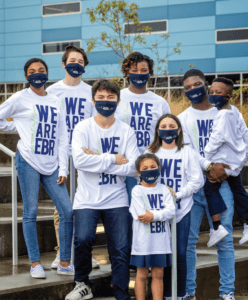
East Baton Rouge Parish sought a creative solution to meet the needs of its 40,283 diverse learners and 2,200 teachers—they leveraged resources available to them outside of their community. 

Finding solutions

Dr. Sito Narcisse, superintendent for East Baton Rouge Parish, faced the challenge that plagues many schools in the U.S., a nationwide teacher shortage. With many families seeking remote education options, Louisiana’s East Baton Rouge Virtual Academy (EBRVA) had quickly grown to 1,400 students; nearly half that number in grades 6-12. To help support these students, he knew he needed an innovative solution.

Narcisse was familiar with ASU Prep Digital, an accredited online K–12 school that is part of Arizona State University, the college ranked #1 in innovation for the last eight years by U.S. News & World Report. To help keep students learning and on pace to graduate, he asked for assistance and formed a multi-year partnership with ASU Prep Digital for EBRVA’s 6-12 program last spring. 

Customized model    

In this partnership, ASU Prep is the instructional provider for the school, providing curriculum and quality teachers certified in the subject areas they teach. The ASU educators are completing requirements to also become teacher certified in Louisiana. EBRVA is the students’ school of record and classes operate on East Baton Rouge Parish’s school schedule.

Discover other ways to partner with ASU Prep Digital. 

“We appreciate the opportunity to work with this community and this partnership helps us serve others and expand and create new learning models,” said Dr.  Christy Cleugh, Director of National Partnerships for ASU Prep Digital. “Their goal is our goal—to provide outstanding educational opportunities for students and provide excellent teachers well versed in the digital atmosphere.”

For all collaborative partnerships, like the one with East Baton Rouge, ASU Prep meets with the school and district’s leadership to first understand the needs of their community of learners. Then, they customize the support and make adjustments if needed along the way.  

Student-center focus and personalization

Dr. Christy Cleugh, Director of National Partnerships at ASU Prep Digital “We strive to get to know each student as an individual and treat each classroom as a classroom of one,” Dr. Cleugh said. “We see a great deal of engagement and have lots of positive feedback. We hear, ‘thank you, we know you care about us’ from parents and students a lot. It feels like we’re building nice solid relationships with the families.”

Dr. Christy Cleugh, Director of National Partnerships at ASU Prep Digital

Providing student-centered focus to ensure all students have the opportunity for success no matter where they live is a core credo at ASU Prep.

Rachel Maleski, Rachel Maleski, Digital Partnership Principal for ASU Prep Global, said, “We know the importance of keeping students at the center of every decision we make—it’s what will lead to the best outcome for students. The core of our mission as an organization is to constantly iterate new models for educational success and increase academic achievement for all learners.”

Rachel Maleski, Digital Partnership Principal for ASU Prep Global

Working together achieves more

Prior to the pandemic, Maleski said she felt educators and schools often worked in silos and competition. But she said she feels a shift now and there is more partnering and emphasis on the importance of collaboration.

“Collaborating really strengthens possibilities. When you partner with us, you are not alone,” she said. “We work together to ensure all students have equitable access to quality instruction. We think about who we are including and how we can make it work for them. It’s a two-way collaborative endeavor. Our partners learn from us, and we’re learning from them and with them.”

ASU Prep is proud of the continued progress students are making at EBRVA, and celebrates East Baton Rouge Parish for leveraging resources and relationships to build bright futures.   

EBREast Baton Rouge Virtual Academy
East Baton Rouge Virtual Academy (EBRVA) is a free, online EBR School System public school for students in grades PreK through 12. Enrollment is open to all families within the East Baton Rouge School district. Learn more at https://ebrschools.org/schools/ebrvirtual/

Partner with ASU Prep Digital
ASU Prep Digital is an accredited online K–12 school providing districts with professional development options customized for their needs, including virtual teacher mentoring. For information on ways ASU Prep Digital can help with teacher shortages and other needs, visit our Teacher Mentoring webpage or email partnership@asuprep.org.

Parent and Family Engagement Matters

« Back  |  

How to get your parents and teachers working together in partnership. 

Parent and family engagement in a child’s education is a powerful predictor of academic success. Yet, many parents are noticeably absent from school activities. There are any number of reasons why—stress and survival mode among them. A recent survey by the American Psychological Association showed that 73% of adults said they are overwhelmed by the number of crises facing the world right now. 

One sure thing that keeps parents from being involved in their child’s education is their not knowing how to be involved.

  • Be intentional and invite parents to participate. This may sound obvious but keep sharing opportunities with parents on ways they can get involved. Invite them to a live lesson. Ask them to join a coffee chat and discussion. Grade level does not matter. Invite them to participate.  
  • Improve communication. Effective communication is a two-way flow of information. Newsletters, blogs, and online calendars are great at providing information to parents. But it’s critical to actively solicit feedback from parents. Host a family night. Use social media to connect to parents. 
  • Try to view parent involvement through the parents’ eyes. You are teaching their child, but it’s important to realize your student may not be their only child. Parents with multiple children in varying grades are navigating different levels of learning and involvement based on ages and stages. Consider these questions: Is their job demanding and stressful? What does their home life look like? Are they also caring for aging parents or extended family? 
  • Exercise patience. Remember, it’s not within your control whether a parent engages in a school activity. But, if they did not attend, be sincere and let them know they were missed. Find out if they have a special skill or job they’re willing to share as a guest speaker. Keep the open invitations coming.

Want more?
Check out this post to go deeper into the importance of the connection between parents/families, schools, and student achievement.    

Try ASU Prep Digital Professional Development at no cost.
Schools and districts across the country turn to the experts at ASU Prep digital for PD solutions, customized for their needs. For a limited time, we’re offering one complimentary asynchronous training course for your teachers—no strings attached. Browse course offerings on our ASU Prep Digital Training Portal and contact me to claim your complimentary course.